Tree Service · Frisco, TX
Emergency & Storm Tree Service in Frisco, TX
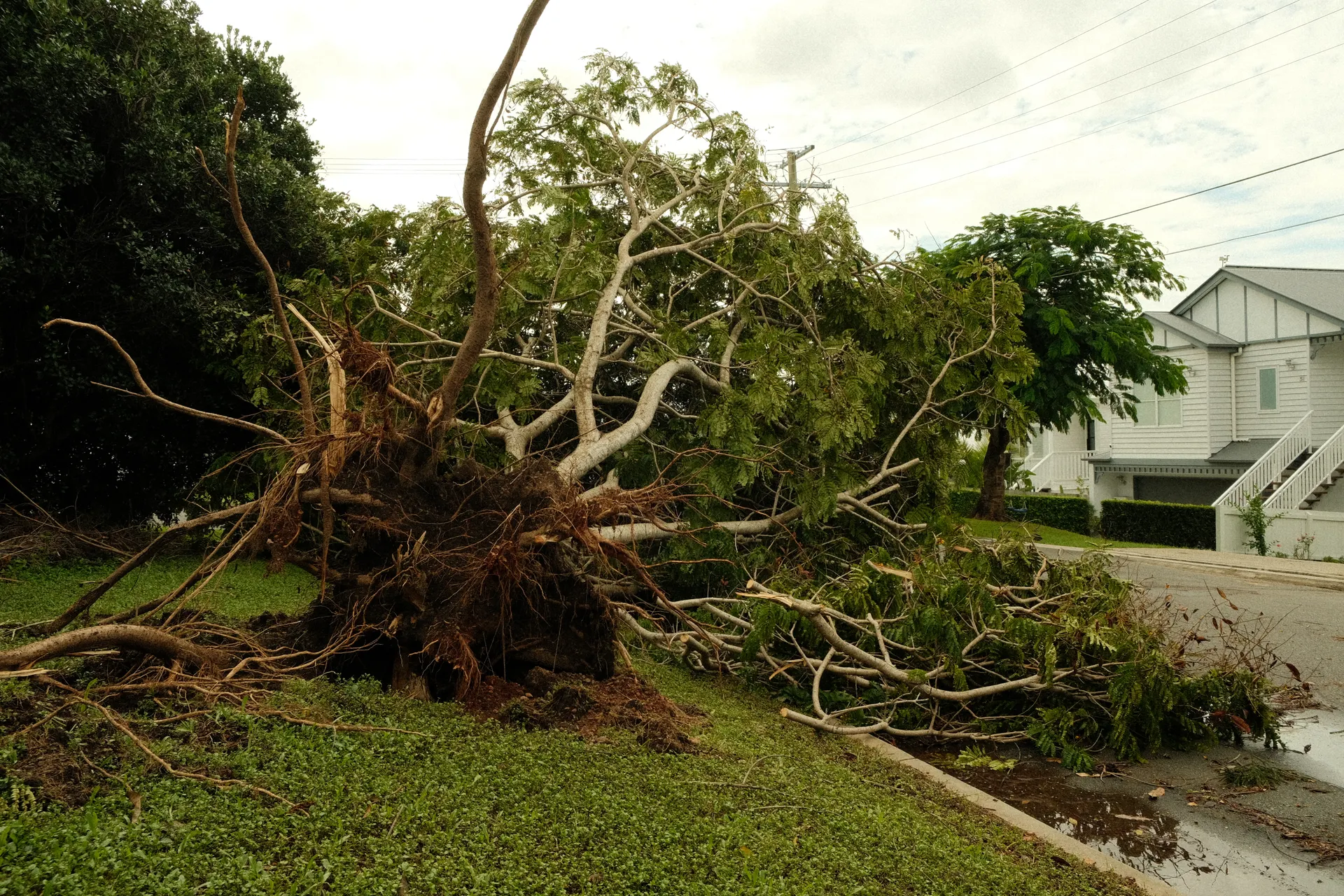
When the phone rings about a downed tree, the first minute matters most. Tree Service Frisco Woods Co answers every call — 2 a.m. or 2 p.m. — and runs through quick triage: is anyone near the tree, is it touching a power line, what did it hit. That triage sets the whole response in motion. A crew reaches anything genuinely hazardous the same day, makes the site safe first — cutting away load, securing what's still standing — and only then moves into full removal and haul-off. Fifteen years of running that sequence across Frisco, Prosper, Little Elm, and The Colony means the steps are practiced, not improvised.
Before a crew arrives, what a homeowner does in the first few minutes matters. Stay clear of anything touching a power line — treat every downed line as live until a utility crew confirms otherwise — and don't cut, drag, or climb over a tree still under tension from a hung-up limb or partially uprooted trunk. If it's safe from a distance, photograph the tree exactly as it landed and whatever it hit before anything gets moved; those photos become the first piece of a claim file. Covering a breached roof section with a tarp or shutting off power to an affected outbuilding are reasonable temporary steps — full repairs wait for the crew.
Most homeowners' policies cover tree removal when the tree damaged a covered structure, blocked needed driveway access, or fell across a fence line — coverage that generally doesn't extend to a tree that simply came down in an open yard. Insurers also typically expect a homeowner to take reasonable steps to prevent further damage once a tree is down, sometimes called a duty to mitigate. Every emergency job here closes with a dated, itemized work order describing what was removed and why, plus before-and-after photos — the documentation an adjuster typically wants before approving a claim.
North Texas earns its storm-tree-service demand honestly. Frisco and its neighbors sit under a spring severe-weather track that regularly delivers large hail and straight-line wind strong enough to snap weak-wooded species outright, and an occasional winter ice storm adds its own weight-loading failures. Bradford pears and over-topped crape myrtles fail especially often, since their structure was already compromised before the storm arrived. Hail and severe thunderstorms remain a leading annual cause of tree failure across the DFW metroplex, and because Frisco grew from roughly 6,100 residents in 1990 to 200,509 by 2020, most of the region's suburban canopy is now large enough that a failure lands on something worth protecting.
What We Do
How Storm Calls Get Handled in Frisco
No two storm calls arrive the same way — a limb hung over a carport in Frisco, a fence flattened under an oak in Prosper, and lakeside debris tangled with a dock in Little Elm each need a different first move. Here's how each piece breaks down.
Round-the-Clock Dispatch & Make-Safe Response
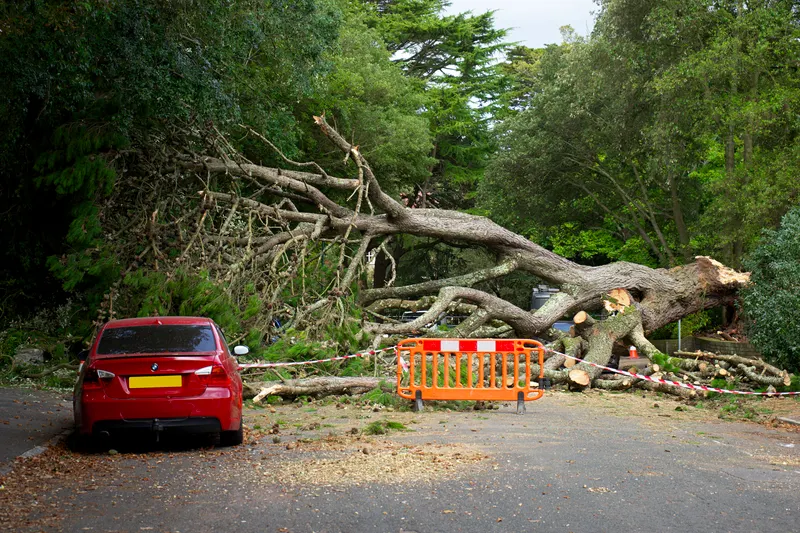
Every call gets the same triage before a crew is sent: what's down, what's still standing but compromised, and whether anyone is in immediate danger. Make-safe work — cutting away tension, clearing an access path, securing a hazard so it can't shift overnight — happens first and fast, often within the same visit that begins full removal. Storm-damaged trees split by hail-driven limb failure, uprooted in saturated clay, or left standing with a cracked leader all start the same way: triage, then stabilize. After-hours dispatch runs at a premium, but the assessment itself is always free.
Removal, Rigging, and What It Costs by Size
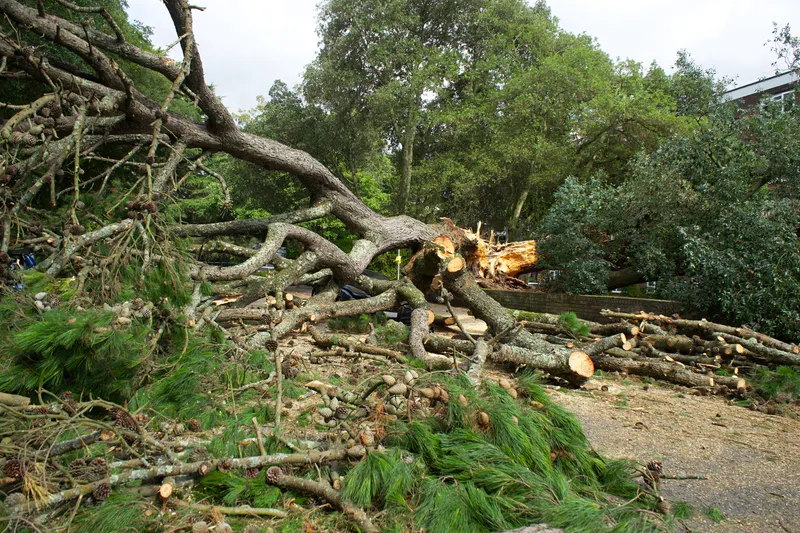
A tree already on the ground gets cleared in a single visit, and a hazardous hanging limb — a split leader in a neighbor's canopy, a widow-maker over a walkway — gets the same urgency as a fully fallen tree. Rigging and directional felling control where each piece lands when a tree is tangled with a fence, shed, dock, or line, common on Little Elm and The Colony's lakefront lots. Pricing follows size once the hazard is handled: small storm-damaged trees run $200 to $800, medium $800 to $2,500, large or crane-assisted removals $2,500 to $15,000 or more.
Same-Day Cleanup, Stump Work, and the Paper Trail
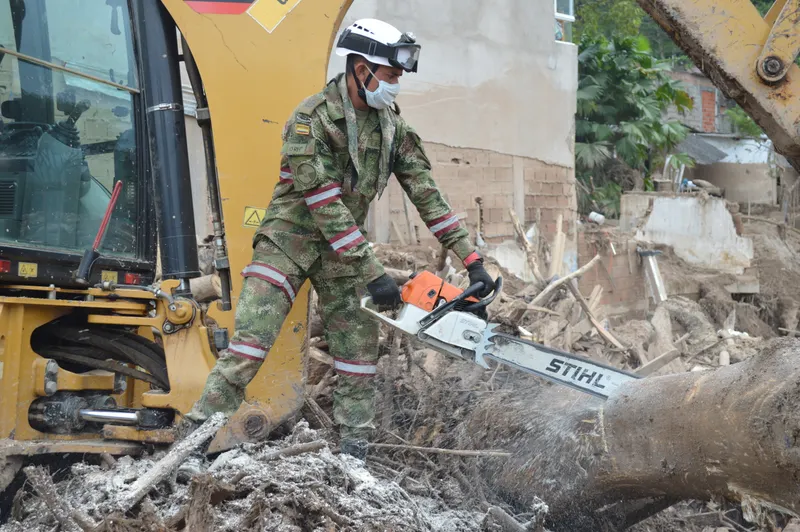
A storm rarely drops one clean tree — it's usually broken limbs, shredded brush, and a stump left at grade. Debris cleanup and haul-off happens in the same dispatch as the hazard removal, not a later second visit, and stump grinding is offered on the spot at $2 to $5 per diameter inch (roughly a $300 minimum; hardwood like oak runs 20 to 30% higher). Every job closes with a dated invoice and before-and-after photos, a clean record on file if a claim needs to be filed.
The Benefits
What Fast, Documented Response Actually Protects
Speed matters for safety, but it also matters for the paperwork that follows a storm claim. Here's what a fast, properly documented response protects beyond just clearing the yard.
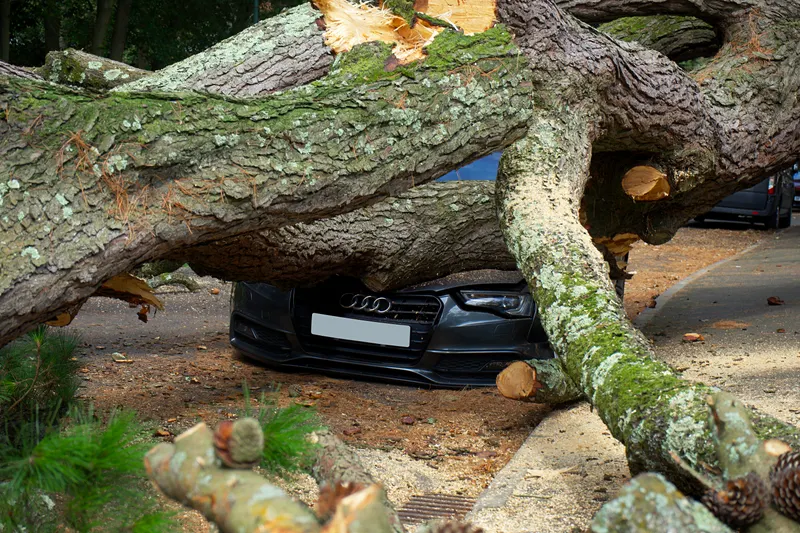
Limits the Damage a Claim Later Has to Cover
A cracked leader or leaning trunk left untouched overnight doesn't stay the same size problem by morning — wind and rain keep working on an already-compromised tree. Insurers generally expect reasonable steps to prevent further damage once a tree is down, so a same-day make-safe response often keeps a claim from expanding. Triage happens by what's actually threatened first — a bedroom window, a carport, a walked path — not strictly in call order.
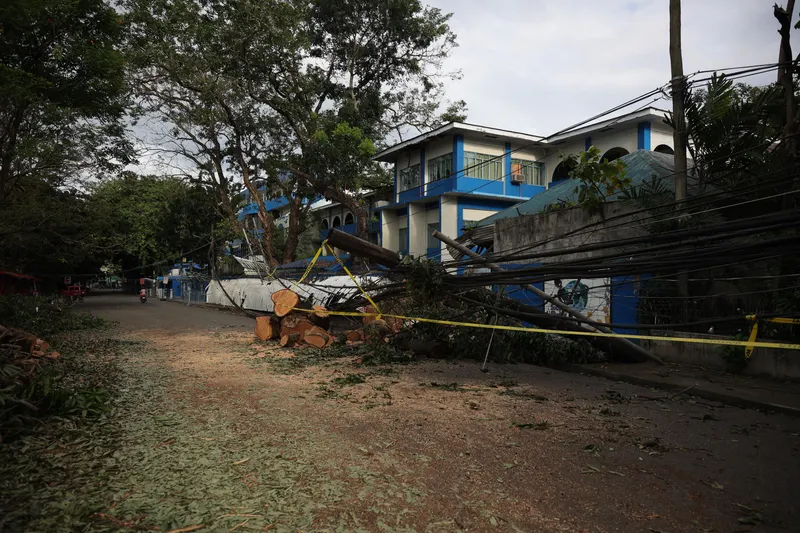
Matches a Storm Pattern That Repeats Every Year
Collin and Denton County's spring severe-weather season isn't rare — hail and straight-line wind move through Frisco, Prosper, Little Elm, and The Colony most years, and the same weak-wooded species fail the same way each time. Keeping dispatch, rigging equipment, and crane access already lined up before the next system arrives makes a fast response possible, rather than scrambling mid-storm. That standing readiness is the difference between a same-day make-safe and a multi-day wait.
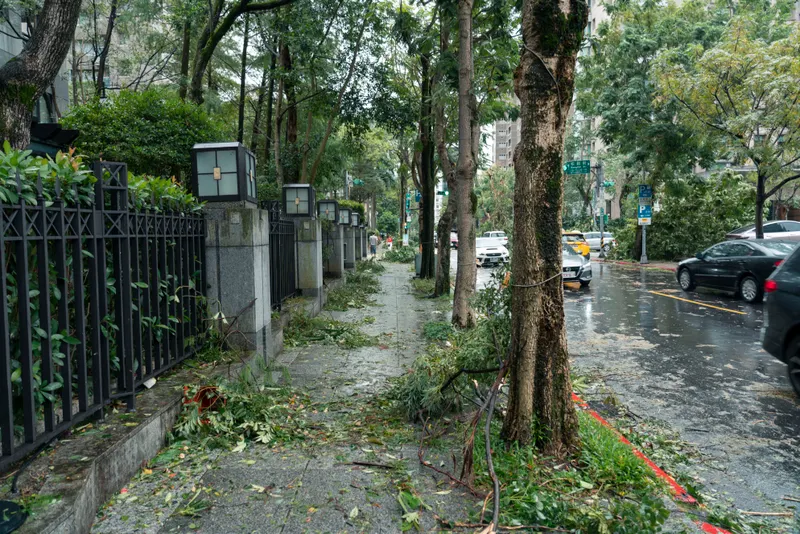
Keeps Cuts to Standard Even Under Pressure
A storm job tempts corner-cutting — a flush cut instead of one at the branch collar, rigging skipped to save ten minutes — because everyone wants the hazard gone immediately. Work here still follows ANSI A300 cutting standards and ANSI Z133 safety requirements under storm conditions, since a rushed cut that keeps a tree from compartmentalizing creates a second, slower problem. That standard matters if an adjuster or inspector ever reviews the work afterward.
Why Us
Why Frisco Calls Us First When a Tree Comes Down
Fifteen years of running the same triage-to-cleanup sequence across Collin and Denton County means the phone gets answered at 3 a.m., and the paperwork is ready before an adjuster ever asks for it.
A Person Picks Up, Not a Menu
Open 24 Hours means an actual person answers and starts triage immediately, not a voicemail routed to a callback the next business day. A midnight call about a tree on a fence line gets the same triage and dispatch urgency as one placed at noon.
Arborists Decide What's Salvageable Before Anyone Cuts
Not every storm-damaged tree needs to come down entirely — an arborist looks at what's actually failed, what's still under load, and whether cabling or bracing can save the rest before defaulting to full removal. The crews and arborists coordinated for this work are named before dispatch, so that judgment call comes with real credentials behind it.
One Dispatch, One File, No Loose Ends
Make-safe, removal, stump grinding, debris haul-off, and the documentation an insurance claim needs all come out of the same call, so a homeowner isn't juggling separate vendors. If a tree that survives shows disease or dieback weeks later, the same coordination continues through tree health care.
Unsure whether what's down is a same-day emergency or something that can wait? The tree removal page covers non-emergency removals on your own timeline, and if a tree survives a storm but later shows dieback or disease, tree health care covers oak wilt, EAB, and ongoing treatment. For the complete list coordinated across Frisco, Prosper, Little Elm, and The Colony, see our services — the same Frisco-based crew network behind every storm call here.
Frequently Asked Questions
What actually happens in the minutes after I call about a downed tree?
A dispatcher asks a few quick triage questions — whether anyone is near the tree, whether it's touching a power line, what it hit, and whether it can shift on its own. That triage decides how fast a crew moves and what gear comes with them. For a genuine hazard, a crew is typically on-site the same day, and the first work done is always making the site safe before removal begins.
What should I do in the first few minutes after a tree comes down on my property?
Stay well clear of anything touching a power line and treat every downed line as energized until a utility crew says otherwise, and avoid cutting or dragging a tree still under tension from a hung-up limb or partially pulled root plate. If it's safe from a distance, photograph the tree where it landed and whatever it hit before anything gets moved, since those photos are usually the first thing an adjuster asks for. Covering an obvious roof breach with a tarp is a reasonable stopgap.
Will my homeowners insurance actually pay for storm tree removal?
Most policies cover tree removal when the tree damaged a covered structure, blocked the only driveway access, or fell across a fence line, but coverage generally doesn't extend to a tree that simply fell in an open yard. Insurers also typically expect reasonable steps to prevent further damage once a tree is down, one more reason a same-day make-safe response matters. Every policy reads differently, so the honest answer is to call the insurer directly.
What documentation do you provide for an insurance claim?
Every emergency job closes with a dated, itemized work order describing exactly what was removed, from where, and why, along with before-and-after photos taken during the visit. That's the paperwork most adjusters ask for before approving a claim, assembled as part of the job rather than requested as a separate follow-up. If an adjuster needs something clarified, the same crew that did the work can usually answer directly.
Does after-hours or weekend storm response cost more than a scheduled visit?
Yes — emergency and after-hours dispatch runs at a premium over the standard daytime rate because of the urgency and off-hours labor involved, though the exact amount depends on hazard, access, and whether crane support is needed. Pricing by tree size still applies on top of that: small storm-damaged trees typically run $200 to $800, medium $800 to $2,500, large or crane-assisted removals $2,500 to $15,000 or more. The assessment and quote are always free, regardless of the hour.
My tree is still standing but cracked — is that an emergency or can it wait?
A standing tree becomes an emergency when there's a visible split trunk or cracked leader under active tension, a lean that's clearly worsened, or debris hung up in the canopy that could shift without warning. A tree that just lost some leaves or has minor cosmetic damage usually isn't urgent and can be scheduled as a routine job through the tree removal page instead. When it's unclear over the phone, describing what's visible is usually enough for a dispatcher to make the call.
Why does North Texas get hit with so much storm tree damage?
Frisco and its neighboring towns sit under a spring severe-weather track that regularly brings large hail and straight-line wind strong enough to snap weak-wooded species outright, and an occasional winter ice storm adds weight-loading stress limbs rarely see otherwise. Bradford pears and over-topped crape myrtles tend to fail first, since their structure was already compromised. Hail and severe thunderstorms are a leading annual cause of tree failure across the DFW metroplex, and the region's rapid, overlapping suburban growth means most local trees are now large enough that a failure lands on something worth protecting.
Can you coordinate directly with my insurance adjuster?
Yes — the crew doing the work can speak directly with an adjuster about what was removed and why, and the dated work order plus before-and-after photos generated during the job are usually enough to answer follow-up questions without a separate site visit. Scope, coverage decisions, and claim approval are between the homeowner and the insurer; the documentation here supports that conversation rather than replacing it. Having the paperwork ready from day one tends to keep the claim moving.
What happens if a tree fell on a neighbor's property, or theirs fell on mine?
Responsibility for a fallen tree generally follows which property it's resting on once it comes down, regardless of whose yard it grew in, though details can vary and are ultimately a matter for the respective insurers to sort out. From a work standpoint, removal still gets triaged and dispatched the same way — what's hazardous gets addressed first regardless of the property line question. Photographing the tree and the fence or structure it affected before anything is moved gives both households a clear record.
Do you cover Prosper, Little Elm, and The Colony for storm calls, or just Frisco?
Storm and emergency tree service is dispatched across Frisco, Prosper, Little Elm, The Colony, and the surrounding Collin and Denton County towns, not just inside Frisco city limits. Storm systems typically move through the whole Dallas North Tollway corridor at once, so a single event often means calls from several of those towns the same night. See the tree service in Little Elm, TX page for what storm response looks like there specifically.
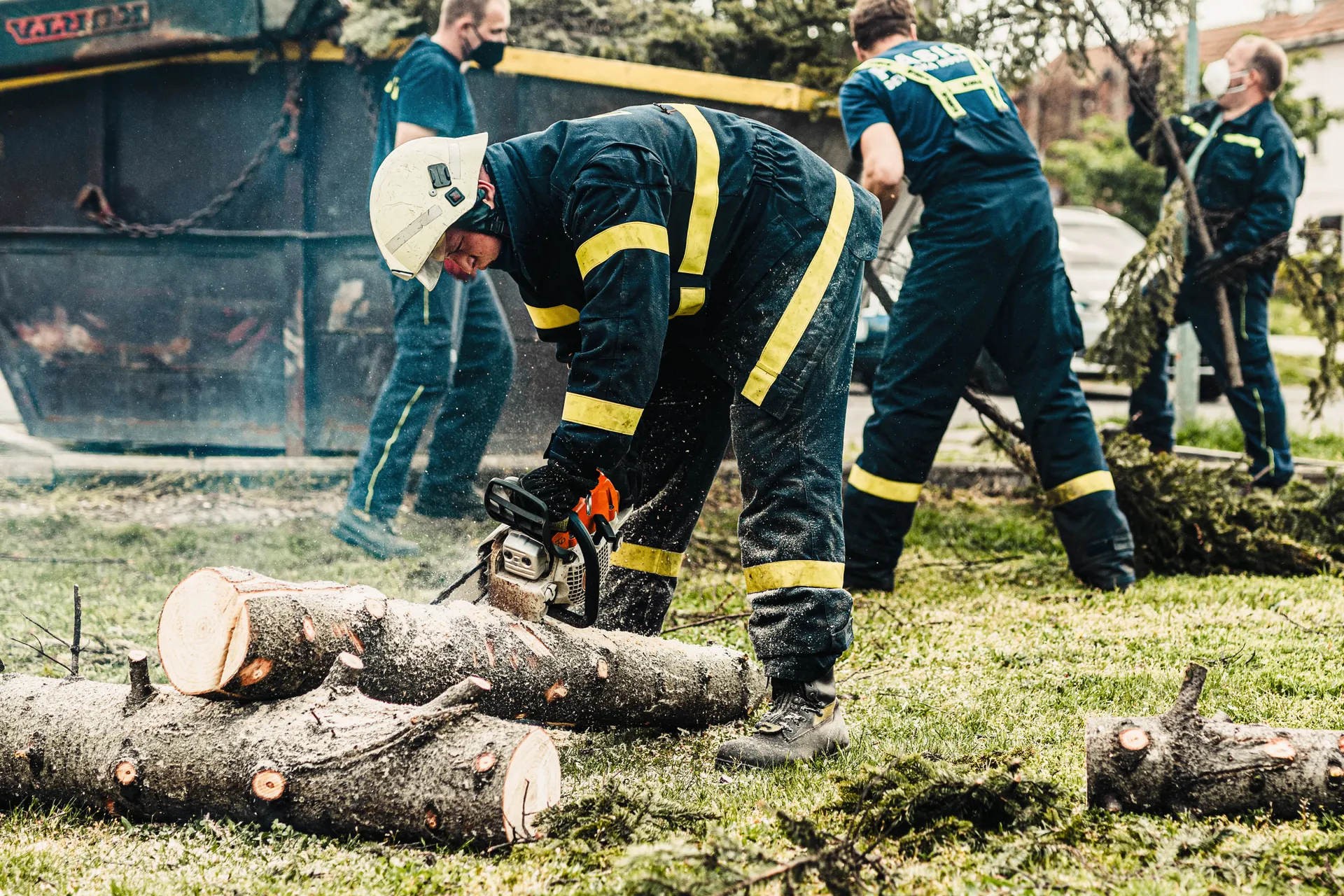
Report Storm Damage — Dispatch Starts on the Call
Triage, make-safe, and full cleanup, documented start to finish. Call (469) 238-1159, answered 24 hours a day.
(469) 238-1159