Tree Service · Frisco, TX
Tree Planting & Transplanting in Frisco, TX
Tree Service Frisco Woods Co has put trees in the ground across Frisco, Prosper, Little Elm, The Colony, and the wider Collin and Denton County for 15 years — species selection matched to the soil underfoot, root-flare-correct planting depth, young-tree structural training, and full-size transplanting for a tree that's outgrown its spot. Calls run 24 hours a day, and every planting starts with a soil read before a shovel ever touches ground.
Frisco doesn't have one soil to plant into — it has two, and the property line between them runs roughly along the Dallas North Tollway. East of it sits the Blackland Prairie's expansive clay, which swells after rain and shrinks hard through a dry summer; west and out toward Little Elm and The Colony on Lewisville Lake, the ground turns to sandier Eastern Cross Timbers. A species that thrives in one struggles in the other, so siting starts with which soil the lot actually sits on, not a generic Texas plant list.
This page covers putting a tree in the ground correctly and keeping it structurally sound while it's young — choosing what to plant, digging the hole right, staking and training the first few years, and moving an established tree that needs a new spot. A tree already struggling or diseased belongs on tree health care; one that's outgrown its space and needs to come down instead is tree removal; ongoing shape and clearance once it's established is tree trimming & pruning.
The sequence holds regardless of lot size: read the soil, pick species that match it and diversify the canopy, dig a hole no deeper than the root ball with the flare left visible at grade, backfill without a compacted clay rim that traps water, then stake and train the first two to three growing seasons before letting the tree stand on its own.
What We Do
Our Tree Planting & Transplanting Services
Planting breaks into four jobs that happen in sequence — pick the right species for the site, put it in correctly, train it while it's young, and move it later if the lot changes. Each one is scoped and quoted separately, since a species-selection consultation and a full transplant are entirely different visits with different equipment on-site.
Species Selection & Siting for Frisco's Split Soil
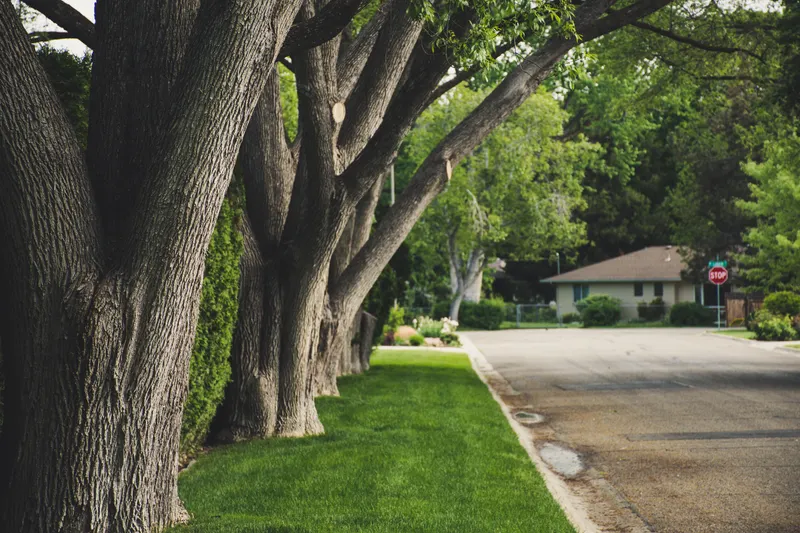
A new-build lot in Frisco or a Windsong Ranch acreage tract in Prosper usually sits on Blackland clay, where cedar elm, bur oak, live oak, pecan, and bald cypress handle the swell-shrink cycle far better than a tree bred for sandy loam. Out toward Little Elm and The Colony, the ground shifts to sandier Cross Timbers soil, and native cottonwood, hackberry, and bur oak read that ground more accurately than a clay-adapted species would.
Siting also means deliberately spreading species across a property rather than planting a monoculture, since a lot leaning on red oaks or ash concentrates every disease risk in one basket. A pre-planting site walk checks drainage, existing root grafts to a neighboring oak, and utility lines before a species list ever gets written down.
Professional Tree Planting — Depth, Flare & Backfill
Most premature tree decline traces back to how the tree went into the ground, not what species it was — planted too deep, the root flare buried under mulch or fill soil, or backfilled with pure clay that rings the root ball like a bathtub and drowns it after the next rain. Correct planting keeps the hole no deeper than the root ball, leaves the flare visible at grade, and backfills with soil that lets water move through instead of pooling against the roots.
On Blackland clay, that backfill choice matters more than almost anything else in the job, and it's the single step most likely to get skipped by a crew that isn't planting full-time.
Young Tree Structural Training
Frisco's newer subdivisions and Prosper's Windsong Ranch and Star Trail developments planted thousands of shade trees in the 2010s that are only now old enough for their first structural correction — a young tree's early branch angles and leader dominance are far easier to fix with a hand-pruner at year three than with a saw at year fifteen. Training follows ANSI A300 pruning structure from the start: one dominant leader, well-spaced scaffold branches, and co-dominant stems corrected before they become a splitting risk.
Staking, where used, comes out once the root system anchors the tree on its own — usually within a season or two.
Tree Transplanting
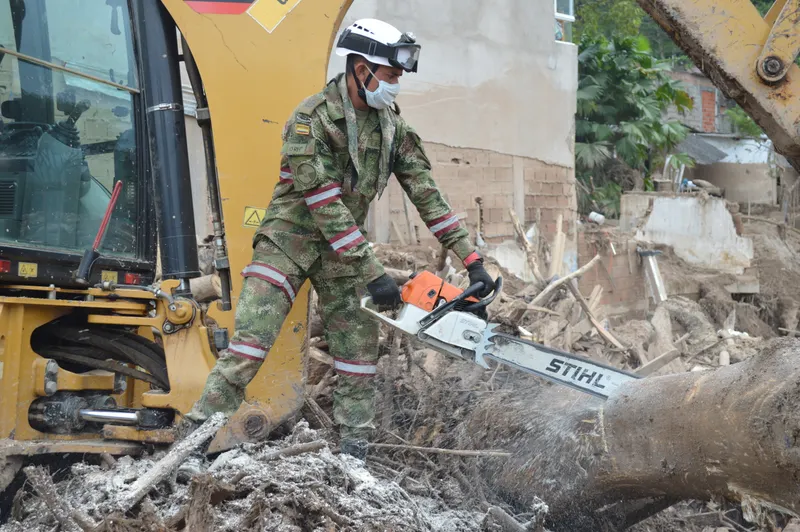
A tree that's outgrown its spot — too close to a foundation, in the way of an addition, or planted where a driveway is going in — doesn't automatically need to come down. Transplanting moves it as an intact root ball sized to the trunk's caliper, timed for the tree's dormant season so the shock of the move lands when the tree can recover from it fastest.
Not every tree is a transplant candidate; species, root-ball access, and how long the tree has been established all factor into the call before equipment shows up, and a tree with a compromised or girdled root flare from its original planting is a harder move than a healthy one of the same size.
The Benefits
Tree Planting Benefits
Planting the right tree in the right place pays off well past the first season — for the tree, the lot, and whoever owns it next.
A Canopy That Isn't Betting on One Species
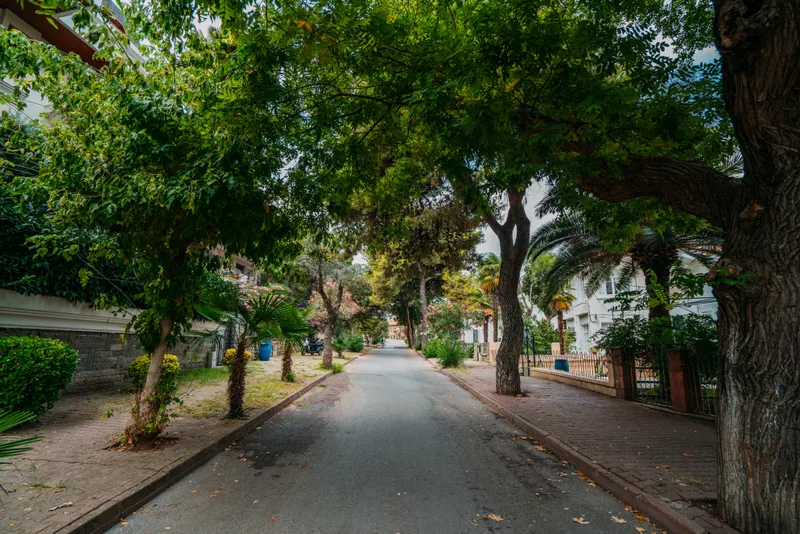
Oak wilt is confirmed in 76 Texas counties and emerald ash borer is already inside the Dallas metro and Rockwall County, so a lot planted heavily in red oaks or ash is carrying concentrated risk it doesn't have to. Diversifying with cedar elm, live oak, bur oak, pecan, and bald cypress spreads that risk across species with different vulnerabilities, so one pathogen or pest can't take out the whole canopy at once. It's a slower conversation than picking whatever's cheapest at a nursery, but it's the one that protects the investment — a mixed-species planting also spreads out the seasonal workload of pruning, since not every tree on the property needs its structural cut in the same window.
Shade and Value That Build Over Decades
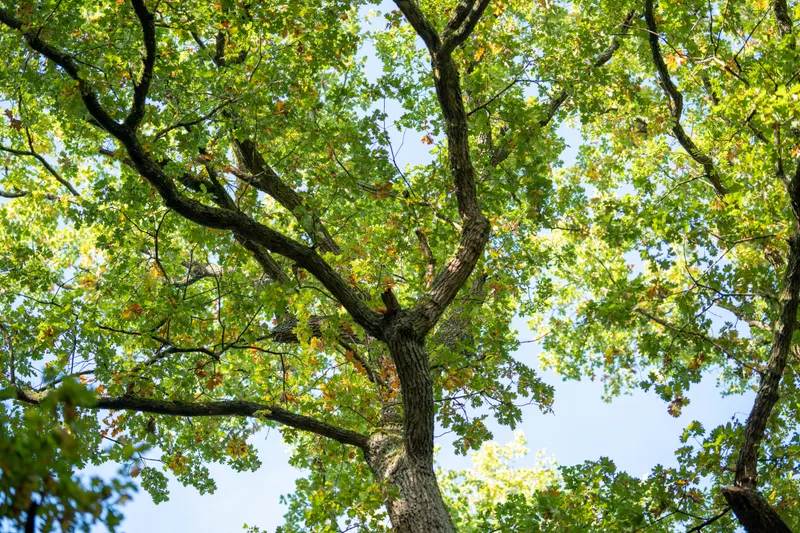
A mature, healthy tree can add measurable resale value to a property and cut cooling costs by shading the home, according to USDA Forest Service and Arbor Day Foundation urban-forestry research — but that value only shows up if the tree survives its first several years correctly planted. Frisco's newer subdivisions are still mostly young canopy, which means a well-sited tree planted today is building toward a payoff a decade or two out, not next summer. That's a different timeline than most home-improvement work, and it's exactly why species choice and planting depth matter more than they would on something meant to last five years.
Fewer Conflicts Down the Road
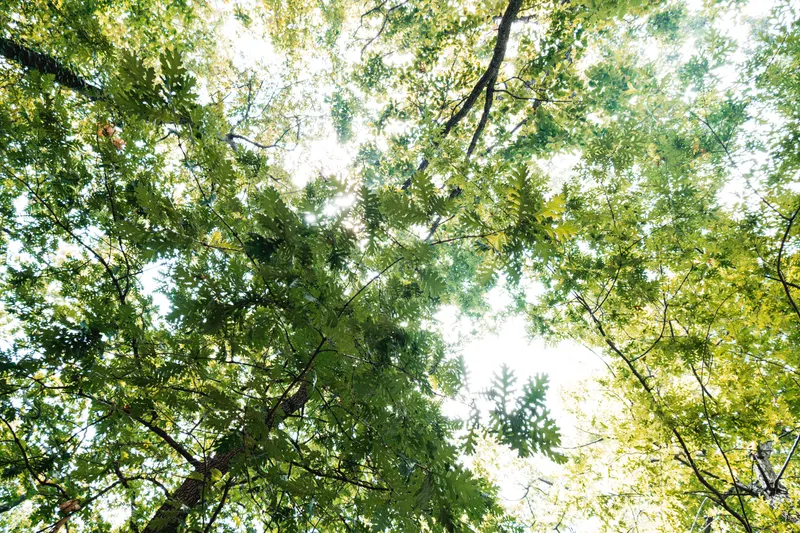
A tree planted too close to a foundation, under a power line, or over a future driveway turns into a removal or a utility conflict years later — a problem correct siting avoids from day one. That matters even more on an HOA or commercial streetscape lot, where a species picked for uniform growth habit and mature canopy width keeps the planting consistent with the development's plan instead of creating an outlier that has to be corrected later. A commercial property near a parking lot or a shared drive has its own version of this problem — a species with an aggressive surface-root habit will eventually lift the pavement it was planted next to.
Related Coordination: Health Care and Pruning
A tree already showing decline instead of thriving belongs on tree health care, where an arborist diagnoses oak wilt, emerald ash borer, and root stress before recommending treatment. Once a young tree is established, ongoing shape and canopy clearance move to tree trimming & pruning, and a tree that's outgrown its spot beyond saving is covered on tree removal.
The Full List of What We Coordinate
For the full list of what's coordinated across Frisco, Prosper, Little Elm, The Colony, and Collin and Denton County, see our services — the same Frisco tree service crew network behind every planting plan here.
Frequently Asked Questions
What trees actually do well in Frisco's clay soil?
On Frisco and Prosper's Blackland Prairie clay, cedar elm, live oak, bur oak, pecan, and bald cypress handle the seasonal swell-and-shrink cycle far better than species bred for sandier or loamier ground. All five tolerate the clay's slow drainage and the summer drought stress that follows it, and none of them concentrate the household's canopy in oak-wilt-vulnerable red oaks or EAB-vulnerable ash. A soil-matched species is also less likely to end up on a tree health-care call five years in.
Does the soil near Little Elm and The Colony need different trees than Frisco?
Yes. Out toward Little Elm and The Colony on Lewisville Lake, the ground transitions from Blackland clay into sandier Eastern Cross Timbers soil, and species like cottonwood, hackberry, and bur oak — the natives already growing along that shoreline — read that ground more accurately than a clay-adapted species would. Planting a straight Blackland-clay species list on Cross Timbers sand is a common mismatch that shows up as slow decline a few years later. We confirm which soil zone a specific lot sits on before recommending species.
Why avoid planting red oaks and ash trees right now?
Oak wilt is confirmed in 76 Texas counties and is lethal to red oaks in particular, while emerald ash borer is already confirmed inside Dallas city limits and in Rockwall County, immediately next to Collin County, and is fatal to green and Texas ash. Planting heavily in either species today means planting directly into two active disease pressures rather than around them. That doesn't mean never planting an oak — live oak and bur oak are still strong choices — it means not concentrating a whole property's canopy in the two most exposed species.
What is the 'clay bathtub' effect and how do you avoid it?
Backfilling a planting hole in Blackland clay with pure clay dug from the same hole creates a smooth-walled basin that holds water like a bathtub after rain, since water moves through the surrounding native clay slower than it drains from a looser backfill. Roots sitting in that trapped water can suffocate and rot even though the tree looks properly planted. Correct planting backfills with soil that lets water move through the hole's walls instead of pooling, and keeps the hole no deeper than the root ball so the flare stays above the standing-water line.
How deep should a tree actually be planted?
The hole should be no deeper than the root ball itself, with the root flare — where the trunk widens out into the roots — left visible right at or slightly above grade, never buried under soil or a thick mulch volcano. Improper planting depth and grade changes from construction are leading causes of premature tree decline, according to ISA best-management-practice guidance, and a buried flare is one of the most common mistakes on a new-build lot. Getting the depth right at planting is far easier than correcting a buried flare on an established tree years later.
Can a mature tree actually be transplanted, or does it have to be young?
Younger, more recently established trees transplant with far less risk than a tree that's had decades to spread a wide root system, but a well-timed move on a mid-sized tree with a properly sized root ball is often realistic. The call depends on species, how accessible the root ball is without severing too much of it, and timing the move for the tree's dormant season so recovery happens before a full growing season demands new leaf-out. Not every tree is a good transplant candidate, which is why we assess before quoting the move rather than assuming it's possible.
Do I need a permit to plant a tree in Frisco, Prosper, Little Elm, or The Colony?
Planting itself generally doesn't trigger the permit requirements that apply to removing a protected tree under Frisco's tree preservation ordinance or the similar rules in Prosper, Little Elm, and The Colony — those ordinances are built around protecting existing caliper, not restricting new plantings. An HOA or a commercial development, though, may have its own species and placement rules tied to a streetscape plan, which is a separate check from city permitting. We confirm both before recommending a planting plan on a lot with either kind of restriction.
How do you train a young tree's structure after planting?
Structural training follows ANSI A300 pruning standards from the first year or two: establishing one dominant leader, spacing scaffold branches so none compete directly with each other, and correcting co-dominant stems — two trunks of similar size splitting from one point — before included bark makes a future split likely. Correcting that structure on a three-year-old tree takes a few hand-pruning cuts; waiting until year fifteen usually means a chainsaw and a real risk of losing a major limb. Staking, if used at planting, comes off once the root system anchors the tree on its own, typically within a season or two.
What's the actual difference between planting a new tree and replacing one lost to oak wilt or storm damage?
A replacement planting starts with the same soil-and-species read as any new tree, but it carries one extra step: confirming what killed the tree it's replacing before putting something similar back in the same spot. A tree lost to oak wilt sitting on a root graft with neighboring oaks is a reason to diversify species at that location rather than replant another oak into the same disease pressure. A tree lost to storm wind, by contrast, is more about picking a species with better wind tolerance and siting it clear of the same failure point.
How is Prosper's acreage lot planting different from a Frisco subdivision lot?
Prosper grew 216% between the 2010 and 2020 census while holding onto large-lot and acreage zoning, so a Windsong Ranch or Star Trail property often has room to plant bigger specimen trees with a mature canopy spread that a standard Frisco subdivision lot simply doesn't have space for. That extra room also means more flexibility in species selection and spacing, since a large bur oak or pecan doesn't have to be sited around a tight setback the way it would on a smaller lot. See tree service in Prosper, TX for how that acreage character shapes tree work generally across the town.
Plan a Tree Planting or Transplant
Species matched to your lot's soil, planted to the correct depth. Call (469) 238-1159, 24 hours a day.
(469) 238-1159