Tree Service · Frisco, TX
Tree Removal in Frisco, TX
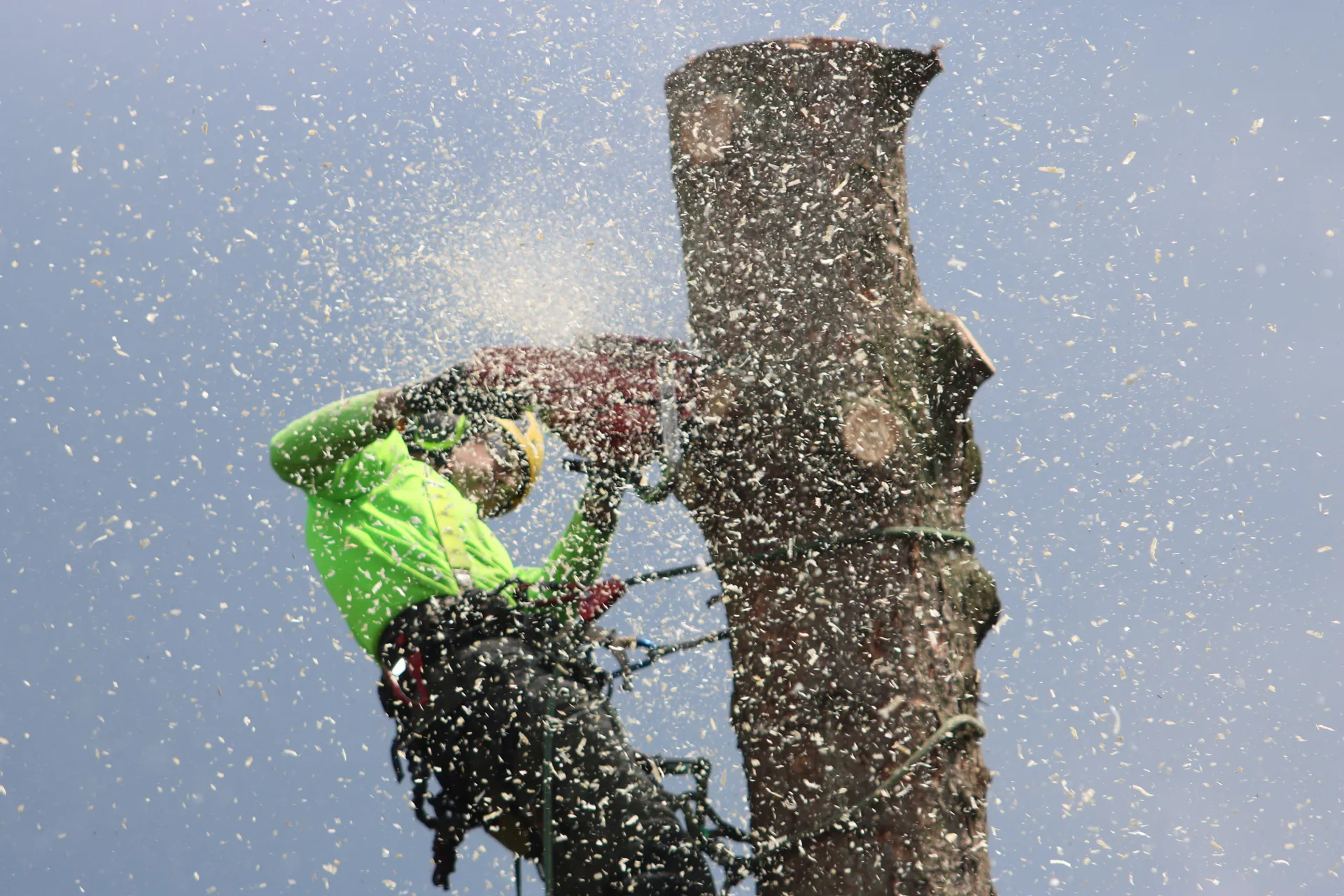
Every removal starts as a hazard-engineering problem, not a chainsaw problem. Before a single cut is made, the job gets scoped the way a rigging crew scopes it: how far the trunk leans and toward what target, what the root plate looks like at the base — heaved, cracked, or still tight to the soil — how much internal decay the wood hides, and where the drop zones are once you account for the house, fence line, pool equipment, and the neighbor's roofline. Tree Service Frisco Woods Co has coordinated that engineering-first removal across Frisco, Prosper, Little Elm, The Colony, and the wider Collin and Denton County for 15 years, with calls answered 24 hours a day. A tree doesn't come down because it's convenient — it comes down because the assessment says the risk outweighs the cost of doing it correctly.
That assessment carries extra weight here because North Texas hands local trees a rough set of conditions to fail under. Blackland Prairie clay beneath most of Collin County swells in wet spells and shrinks hard through summer drought, working against root plates year after year until a once-stable lean starts to move. Spring brings hail and straight-line wind that snap brittle species outright, and two disease pressures work through the canopy: oak wilt, confirmed in 76 Texas counties, and emerald ash borer, already inside Dallas city limits and Rockwall County. Frisco grew from roughly 6,100 residents in 1990 to 200,509 by 2020, and neighboring Prosper, Little Elm, and The Colony built out on a similar timeline, so a large share of the canopy reached structural maturity at nearly the same moment — precisely where hazard removals cluster.
This page is specifically about taking a tree down — the hazard assessment, the rigging plan, and execution that gets it safely off the property. Keeping a tree instead is tree trimming & pruning; what's left in the ground afterward is stump grinding; and a tree already down or threatening a structure belongs on the emergency & storm tree service page. A scheduled removal moves at a different pace than an emergency one, but the underlying engineering stays the same.
The workflow follows a fixed sequence regardless of species: assess lean angle, root-plate integrity, and decay; decide between directional felling — dropping the whole tree one direction — and sectional dismantling, taking it apart top-down when there's no margin for a full-length fall; rig accordingly under ANSI Z133 protocol; and bring in a crane when piece sizes or the target below make hand-rigging too risky. A tree over a garage or power line is rarely felled whole — it gets sectioned, each cut lowered on rope.
What We Do
How We Classify a Removal Job
Not every removal calls for the same rigging plan. Here's how a job gets sorted before the crew ever picks up a saw.
Structural Hazard Removals
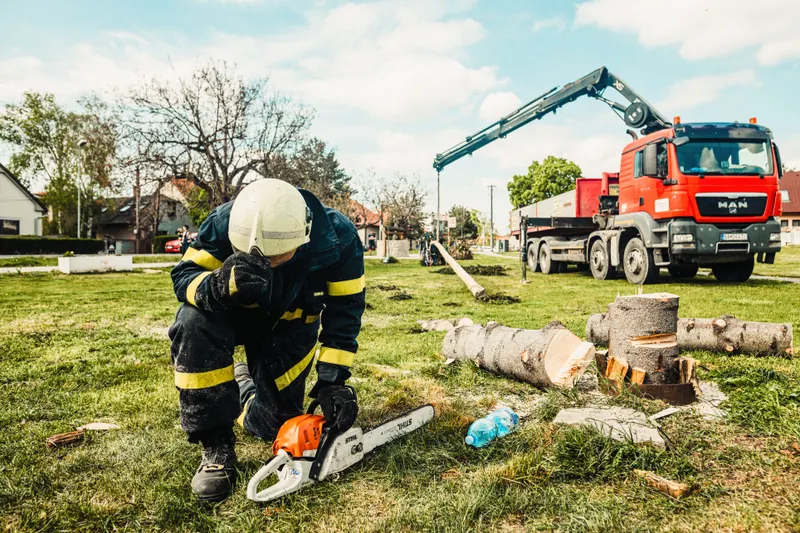
A tree leaning toward a roofline, garage, or fence gets classified as a structural hazard the moment the call comes in. The scoping visit checks lean angle, probes the root plate for heaving or cracking, and sounds the trunk for hidden decay before anything is decided. Once decay or lean crosses a threshold, the plan defaults to sectional dismantling — taken apart from the top in controlled pieces, each lowered by rope, rather than risking a directional fell.
Jobs here run $2,500 to $5,000 for large specimens, climbing past $5,000 when the target below forces a crane into the plan.
Decline & Deadwood Removals
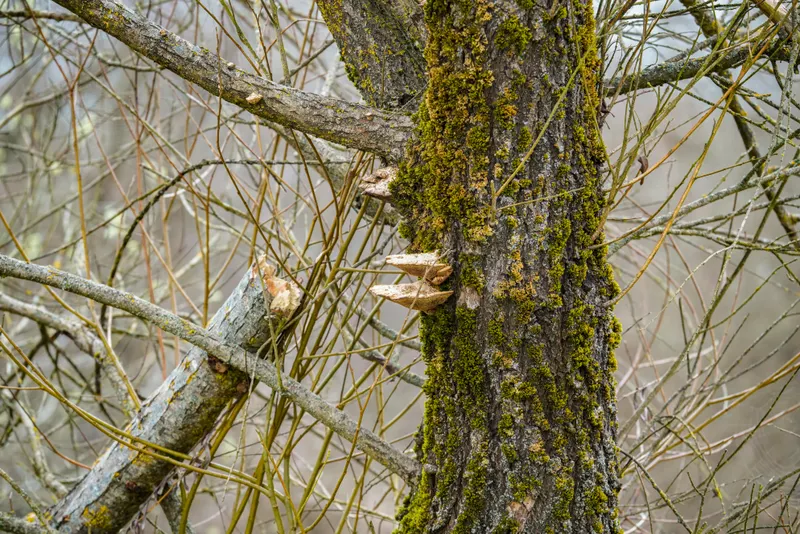
A tree doesn't have to be leaning to be dangerous. Decay from hypoxylon canker, active oak wilt, or an emerald ash borer infestation hollowing out a green ash can all turn an upright tree into an unpredictable one to cut. Decayed wood behaves differently under a chainsaw — it can fail early or drop unexpected debris — so a declining tree gets the same assessment, just with rot as the variable.
Pricing tracks the same size bands as any removal, with decay noted on the on-site quote.

Crane-Rigged Removals
When hand-rigging can't get a piece clear of the target — a backyard with no drop lane, a pool overhang, or a trunk too wide to section by rope — a crane takes over the lift. The operator sets each cut section directly onto a clear landing zone instead of lowering it inch by inch, changing both speed and risk profile. This comes up often on Prosper's larger lots, where mature oaks and pecans clear 80 feet with no room to drop conventionally.
Crane jobs run $5,000 and up, and positioning alone can take half a day before cutting starts.
Dense Hardwood Removals (Oak & Pecan)
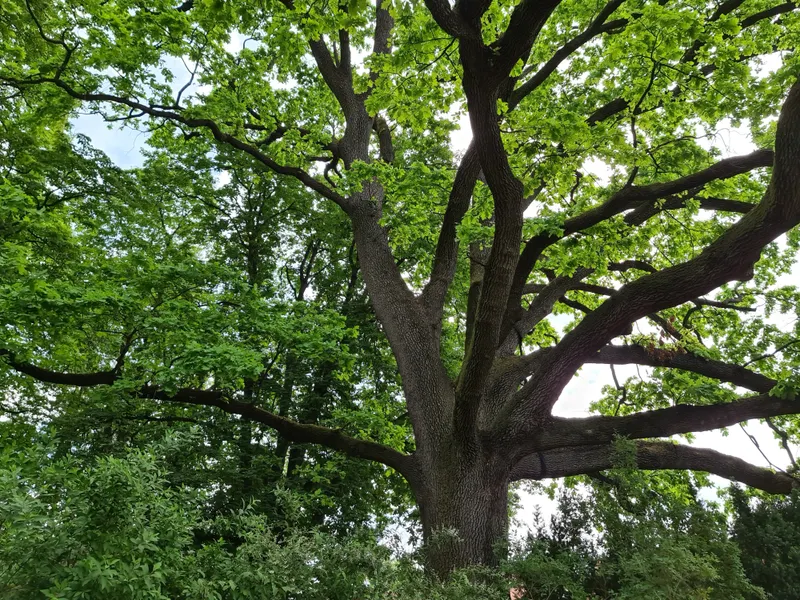
Oak, pecan, and other dense hardwoods rig differently than a lighter cedar elm — the same-size section weighs more, changing the rope, anchor points, and margin for error on every lower. Oaks bring a disease dimension too: since oak wilt spreads above ground through beetles and below ground through root grafts, a diseased oak scheduled for removal sometimes means checking whether trenching is needed for its neighbors.
That same density carries into the stump — oak stumps cost 20 to 30% more to grind than softer species.
The Benefits
The Remove-or-Save Call
A hazard assessment doesn't automatically end in a removal quote. Here's how that call actually gets made.
Signals That Point Toward Saving the Tree
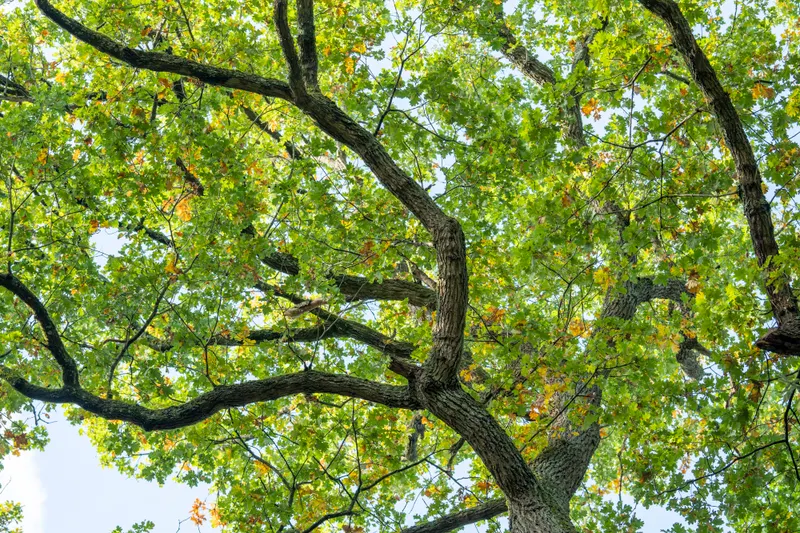
A tight root plate, a lean unchanged since the last look, and deadwood limited to a few isolated limbs are all signals that a tree is a pruning or health-care candidate rather than a removal. Oak wilt caught early can sometimes be slowed with fungicide injection and trenching to sever root grafts, and a drought-stressed tree often responds to deep-root fertilization rather than a saw. Structural pruning under ANSI A300 can also correct a young tree's poor form years before it forces a removal call.
Signals That Point Toward Removal
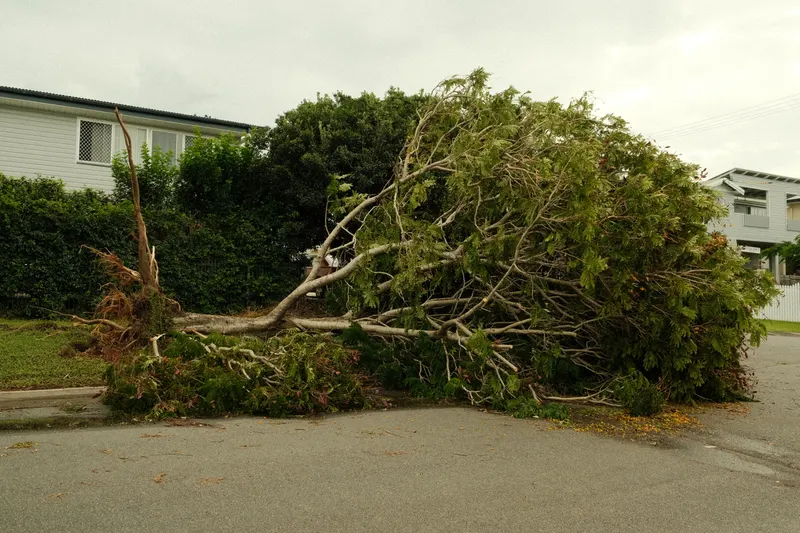
The call tips toward removal when the numbers stop favoring the tree: significant trunk decay found by sounding, a root plate visibly heaved since a storm, more than half the canopy dead, or a lean measurably worse than the last inspection. Proximity changes the threshold too — a marginal tree over a play set gets less benefit of the doubt than one in an open yard. The goal is an honest read, not a default toward the bigger invoice.
Permits on a Protected Tree in Frisco
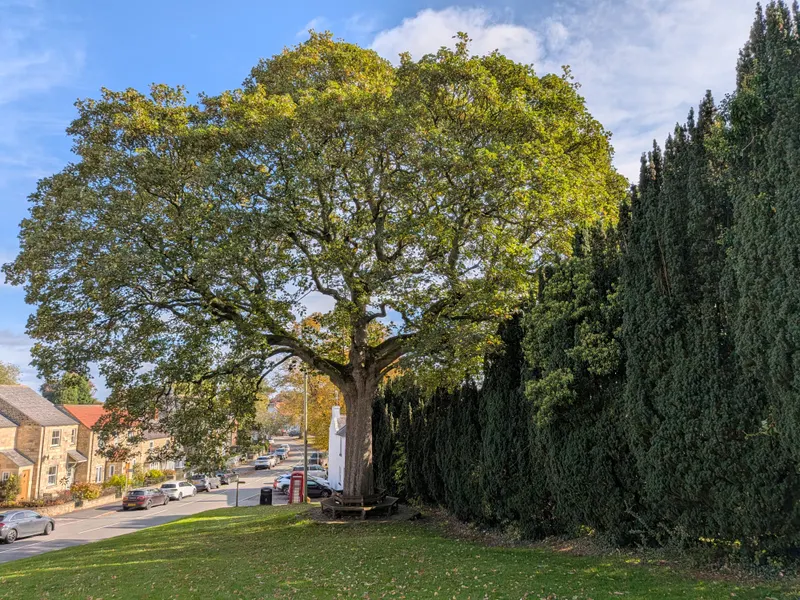
Frisco's tree preservation ordinance protects trees above a set trunk caliper on developed lots, so a qualifying tree generally can't come down without a permit, and removal can carry a mitigation requirement — replacement plantings or a payment into the tree fund. Dead, diseased, and genuinely hazardous trees are usually approvable, but paperwork still has to be filed correctly first. Prosper, Little Elm, and The Colony each run a version of this rule locally, confirmed for the specific address before scheduling.
Not sure if a tree needs to come down, or if it can be pruned back into a stable structure? Tree trimming & pruning covers the corrective pruning that sometimes keeps a marginal tree standing. If a tree is already down or threatening a structure, emergency & storm tree service covers same-day response. Prosper's acreage lots carry the mature, large-specimen canopy that drives crane-rigged removals like these — see tree service in Prosper, TX. For the complete list coordinated across Frisco and Collin & Denton County, see our services — the same Frisco tree service crew network behind every hazard assessment here.
Frequently Asked Questions
What actually gets checked during a removal hazard assessment?
An assessment starts with lean angle measured against true vertical, since a lean holding steady reads very differently from one that's progressed since a prior storm. From there the arborist checks the root plate for heaving, cracking, or soil separation, sounds the trunk for hidden decay pockets, and maps where each piece would land if the tree came down today. Only after those checks does the plan settle on directional felling, sectional dismantling, or crane support.
What's the difference between directional felling and sectional dismantling?
Directional felling drops the whole tree in one controlled motion toward a chosen lane, which only works with enough open space and confidence in how the tree will behave on the final cut. Sectional dismantling takes the opposite approach: the tree is climbed or accessed by lift and taken apart top-down, each piece lowered on rope rather than allowed to fall. Trees over a house, fence line, or neighbor's yard are almost always sectioned, since a bad fall in a felling plan isn't a mistake you get to correct.
When does a removal actually need a crane?
A crane gets brought in when hand-rigging can't get a cut piece clear of what's underneath it — a backyard with no drop lane, a canopy overhanging a pool, or a trunk wide enough that lowering it by rope alone would overload the rigging. The operator lifts and sets each piece directly onto open ground instead, faster and safer past a certain height and target-proximity threshold. This shows up often on Prosper's larger lots, where mature oaks and pecans clear 80 feet with nowhere to drop conventionally.
How is a tree's internal decay actually assessed before removal?
Decay isn't always visible from the ground, so the assessment includes sounding the trunk with a mallet at multiple heights, listening for the hollow response that signals internal rot, and checking for fungal conks, cracks, or bark sloughing away. Hypoxylon canker on drought-stressed oaks and internal hollowing from emerald ash borer are two common culprits found this way. A tree with confirmed significant decay gets rigged more conservatively than a sound one of the same size, since decayed wood can fail earlier and less predictably.
Can an oak with oak wilt be saved instead of removed?
It depends on how far the infection has progressed. Oak wilt, confirmed in 76 Texas counties, moves above ground through sap-feeding beetles and below ground through root grafts connecting neighboring oaks, and a tree with limited canopy loss can sometimes be treated with fungicide injection and protected by trenching those grafts. A tree that's already lost most of its crown is typically past saving and becomes a transmission risk, which is why the whole group of nearby oaks gets evaluated, not just the one in question.
Is emerald ash borer something to actually worry about here?
Yes — emerald ash borer has spread to roughly three dozen Texas counties and is already confirmed inside Dallas city limits and Rockwall County, immediately next to Collin County. Frisco, Little Elm, and The Colony all carry meaningful green ash populations planted during the 2000s boom, and because EAB larvae feed under the bark, visible decline usually shows up only after the infestation is well established. An inspection while trunk injection is still viable beats waiting for the canopy to thin out.
How does a crew protect my lawn, driveway, or fence during a removal?
Protecting the property is part of the rigging plan, not an afterthought — plywood or mats go down under equipment to spread the weight, and large sections come down on rope rather than free-falling onto grass or hardscape. Tight backyard access, pool equipment, and fence lines all get walked and accounted for before the first cut, and a crane is often the better call since it lifts material clear of the yard instead of dropping through it. Any incidental damage gets flagged and addressed directly.
How long does a hazard removal actually take start to finish?
A standard removal with reasonable access — a small-to-medium tree with room to fell or section cleanly — usually wraps in a few hours to a single day. A large or crane-assisted job, particularly an oak or pecan over 80 feet, more commonly runs a full one to two days once setup, cutting, and cleanup are counted. Emergency response moves faster on the initial make-safe portion, with cleanup sometimes following in a second visit if daylight runs out.
Do you handle the leftover stump as part of the removal?
Stump work is offered right alongside removal, but it's priced and scheduled as its own step rather than bundled automatically, since not everyone wants the stump ground the same day. If wanted immediately, grinding runs $2 to $5 per diameter inch with roughly a $300 minimum, and hardwood species like oak run 20 to 30% more because of wood density. Full detail lives on our stump grinding page, and both jobs can be quoted together in one site visit.
Who actually performs the rigging and hazard assessment?
The crews and arborists coordinated through Tree Service Frisco Woods Co work to ANSI Z133 protocol for rigging, aerial work, and felling, with an arborist making the hazard-assessment call before any line goes up. A written scope is agreed on request, worth confirming given how much of a removal's risk sits with rigging quality. That combination of technique and judgment is what keeps a hazard job from becoming an actual hazard on-site.
What changes about removal work between Frisco, Prosper, and The Colony?
The core engineering — assess lean and decay, choose a rigging method, execute to plan — doesn't change city to city, but the trees do. Prosper's acreage-style properties carry bigger, older specimens, pushing more jobs toward crane support, while Frisco's subdivision lots demand careful rigging around fences and pools. The Colony's older 1980s canopy adds a steady stream of large hazard removals. Permit rules differ by city, confirmed against the address before paperwork is filed.
Get a Hazard-Rated Removal Quote
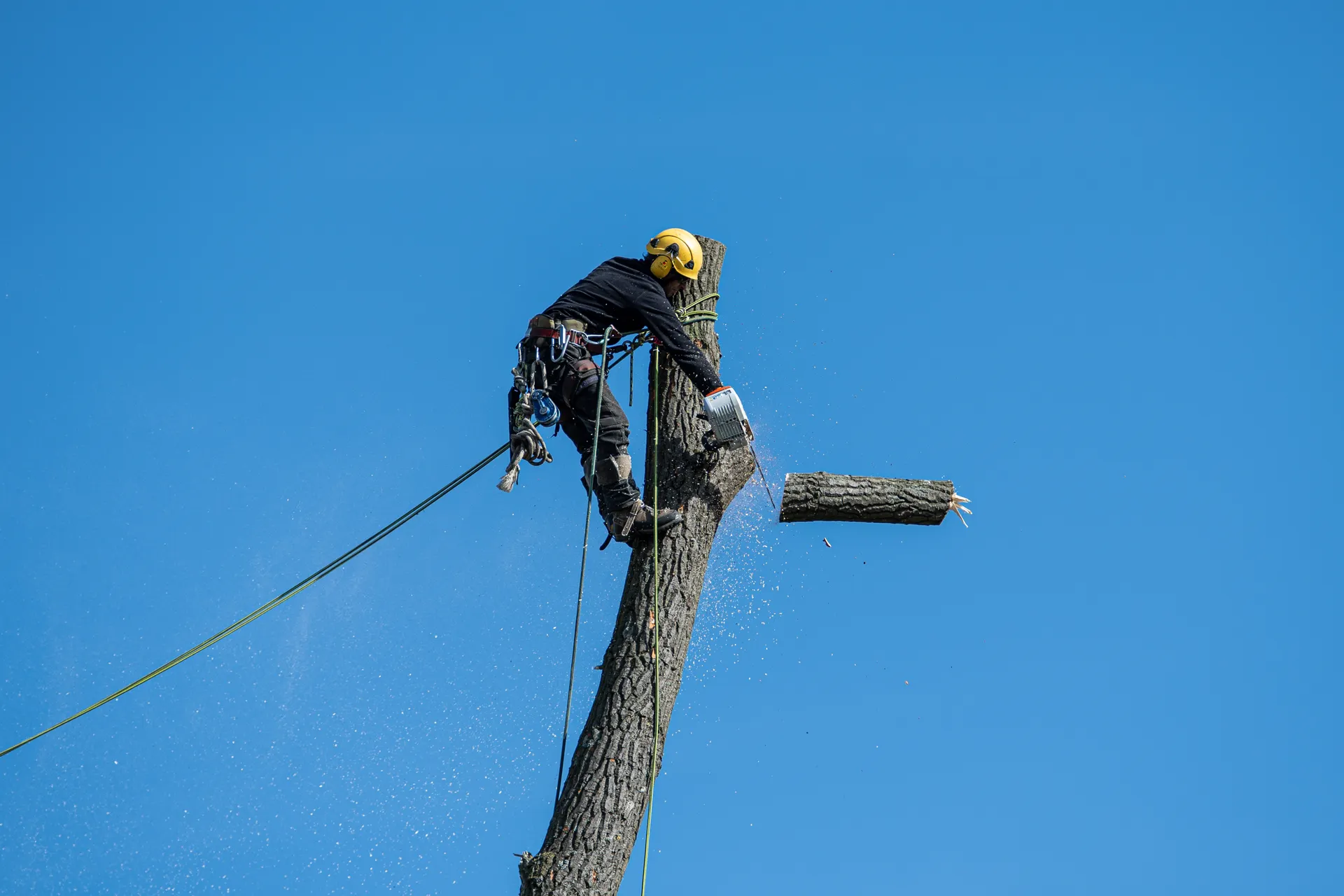
Lean, decay, and rigging plan assessed on-site before a saw comes out. Call (469) 238-1159, 24 hours a day.
(469) 238-1159